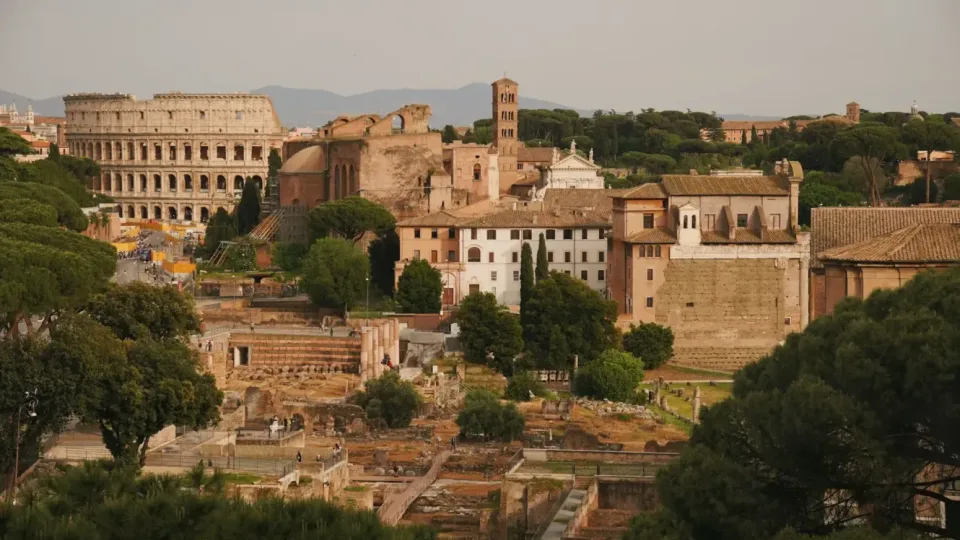

Angels & Demons is one of the easiest film stories to turn into a real Rome itinerary because its clues are tied to actual churches, fountains, squares and monuments. The fictional Path of Illumination sends Robert Langdon across the city through Bernini’s Rome, ending at Castel Sant’Angelo.
The useful version of this route needs one important correction: not every scene was filmed inside the real location. The production was denied permission to film in some churches and Vatican spaces, so replicas and substitutes were used. The places themselves are real, visitable and much more interesting when you separate Dan Brown’s fiction from the actual art and history.
| Angels & Demons Rome route — quick answer | |
| Earth | Santa Maria del Popolo — Chigi Chapel |
| Air | St. Peter’s Square — West Ponente relief |
| Fire | Santa Maria della Vittoria — Bernini’s Ecstasy of Saint Teresa |
| Water | Piazza Navona — Fountain of the Four Rivers |
| Final stop | Castel Sant’Angelo |
| Useful extra stop | Pantheon, where the story initially sends Langdon |
| Time needed | About 5–7 hours if you enter the churches and Castel Sant’Angelo |
| Best way to do it | Walk the central stops and use taxi/public transport for the wider jumps |
Information checked on September 22, 2026. Church opening hours can change for liturgical reasons. Always check same-day access if a specific chapel or interior is essential to your route.
First, one important distinction: story location vs filming location
Visit Lazio maps the real Rome landmarks associated with Angels & Demons, including Santa Maria della Vittoria, St. Peter’s Square, Piazza Navona, Castel Sant’Angelo and the Pantheon. But the production itself did not have unrestricted access to all of these places.
Contemporary reporting from 2008 documented that the Diocese of Rome refused permission to film inside Santa Maria del Popolo and Santa Maria della Vittoria. Vatican environments and some church interiors were therefore recreated or substituted. This is useful rather than disappointing: you can visit the real places from the story and understand what the film reconstructed.
1. Pantheon — the false start
The Pantheon is where Langdon initially heads while interpreting the clue trail. Visit Lazio includes it among the film’s characteristic Rome locations. For a visitor, it is also one of the easiest stops because it sits in the middle of the historic center.
Do not treat it as a quick film prop. The Pantheon is one of the best-preserved ancient Roman buildings and deserves a proper visit if you have not been inside before.
Planning tip: pair the Pantheon with Piazza Navona because they are close. Do not build separate transport legs for them.
2. Earth — Santa Maria del Popolo and the Chigi Chapel
The first real altar on the Path of Illumination is the Chigi Chapel inside Santa Maria del Popolo. The chapel was designed by Raphael and later completed with major contributions by Bernini. The sculpture Habakkuk and the Angel plays directly into the direction of the fictional trail.
This is exactly the kind of location where the art is more interesting than the thriller. The church also contains works associated with Caravaggio, and Piazza del Popolo gives you a strong starting point for the route.
Important: the production was denied permission to film inside the church, so do not expect the real interior to match every cinematic detail exactly.
3. Air — St. Peter’s Square
The “Air” stop is tied to St. Peter’s Square and the West Ponente relief embedded in the paving. In the story, it becomes part of the sequence leading Langdon onward through the elements.
The square is free to enter, but security conditions can change depending on papal events and Vatican activity. If you are also visiting St. Peter’s Basilica, do not pretend this is a five-minute film stop; the basilica can easily take a significant part of the morning.
Best use of this stop: combine the film clue with a proper Vatican-area visit, then continue toward Castel Sant’Angelo later rather than making a special second trip.
4. Fire — Santa Maria della Vittoria
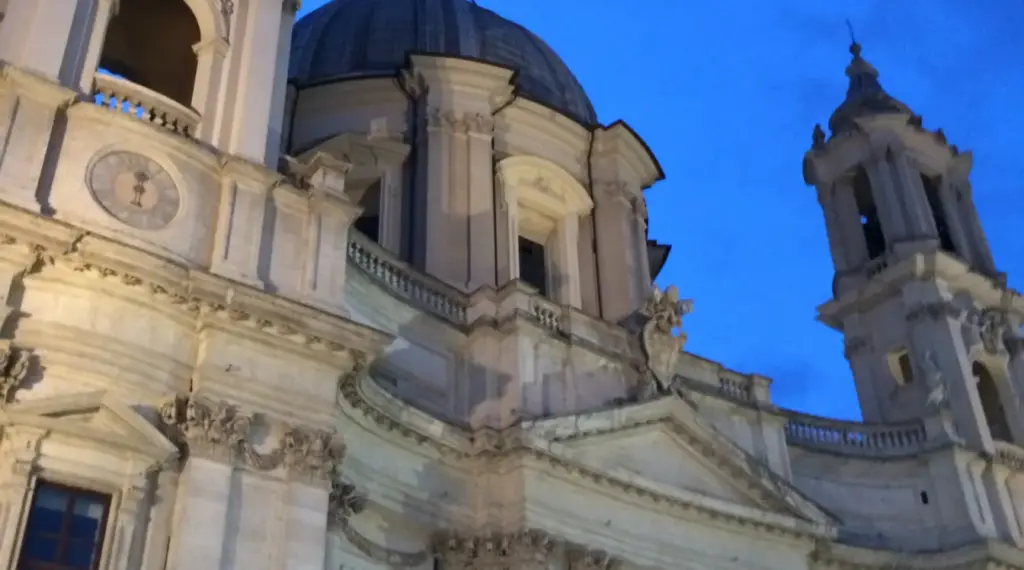
Santa Maria della Vittoria contains Bernini’s Ecstasy of Saint Teresa, one of the most famous Baroque sculptures in Rome. In the story it represents the “Fire” altar.
The church is relatively small compared with major basilicas, which makes the sculpture feel immediate. Again, the production was not allowed to film the relevant church interior, so this is a case where visiting the real art gives you something the film itself could not fully use.
Worth the detour? Yes if Bernini or the film interests you. It is near Piazza della Repubblica, so it can also fit into a route involving Termini, Via Nazionale or the Baths of Diocletian.
5. Water — Piazza Navona and the Fountain of the Four Rivers
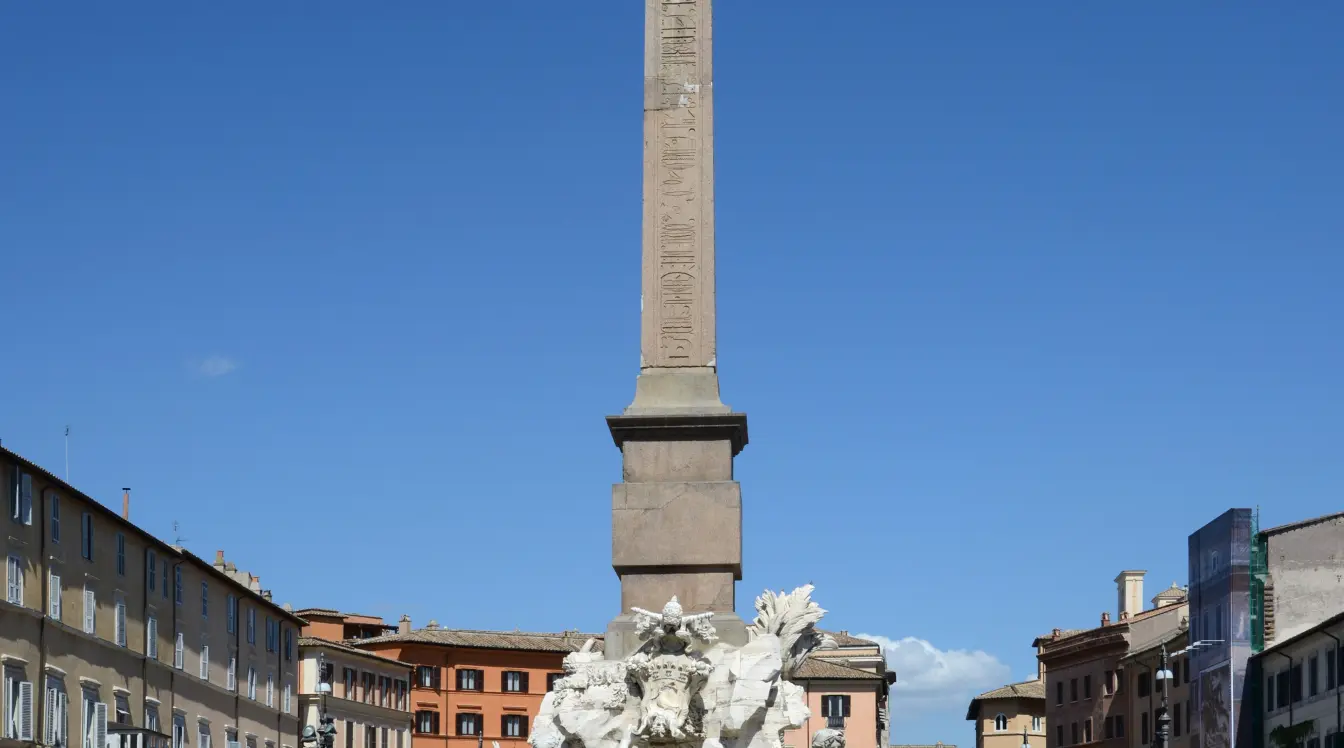
The Fountain of the Four Rivers is the “Water” altar and one of the strongest real-world matches between Dan Brown’s fictional route and Bernini’s Rome. Visit Lazio identifies Piazza Navona as a major location in the film.
The square is free, central and easy to visit. The fountain was unveiled in 1651 and represents four great rivers associated with the continents known in Baroque Rome. The Egyptian obelisk above it gives the entire composition the theatrical quality that made it perfect for the story.
If you are following the path literally, this is where the route begins to feel most cinematic because the square is open, busy and visually dramatic even without a film crew.
6. Castel Sant’Angelo — the Church of Illumination
Castel Sant’Angelo is the route’s climax and the stop I would most strongly recommend paying to enter. The fortress has served as mausoleum, military structure, papal refuge and prison, and its real history is strange enough that it barely needs fictional Illuminati.
The castle’s relationship with the Vatican through the Passetto di Borgo is real. Access to the Passetto itself varies and may depend on specific ticket products or opening arrangements, so do not assume a standard Castel Sant’Angelo ticket always includes every passage associated with the story.
Time needed: allow at least 90 minutes if you are going inside properly.
How to build a route that works in the real city
Can you actually walk the Path of Illumination in order?
You can, but it is not the most efficient tourist route. The locations are spread across central Rome and Vatican City, and the narrative order forces you into unnecessary backtracking.
If you want the story order for the experience, accept that the route will take most of a day. If your goal is to see the places efficiently, group them geographically instead.
Do not force the fictional order when geography says otherwise. Cluster the central locations, use transport for the outlier, and let the novel provide the theme rather than the timetable.
The efficient route I would actually use
- Start at Santa Maria del Popolo. See the Chigi Chapel before the church becomes busier.
- Move to Santa Maria della Vittoria. Taxi/public transport is more efficient than forcing a long walk.
- Continue to the Pantheon. Have lunch or coffee in the historic center.
- Walk to Piazza Navona. See the Fountain of the Four Rivers.
- Walk toward Castel Sant’Angelo. Visit the fortress in the afternoon.
- Finish at St. Peter’s Square. This works beautifully toward late afternoon or evening if no major event changes access.
This order is not faithful to the fictional clue sequence, but it is much kinder to your feet.
A half-day version
If you only have four hours, do not attempt every altar. Choose the historic-center core: Pantheon → Piazza Navona → Castel Sant’Angelo → St. Peter’s Square.
You lose two important Bernini church stops, but you gain a route that also works for a first-time Rome visit.
What is real and what is Dan Brown fiction?
The churches, sculptures, fountains, obelisks and Passetto are real. The Illuminati trail connecting them as a murder puzzle is fiction. The fun comes from seeing how real Baroque art was rearranged into a thriller.
Bernini genuinely worked across several of these sites. That does not mean he designed them as a secret map. A good tour should tell you where the book and film manipulate chronology, attribution and symbolism rather than repeating the plot as history.
Is a guided Angels & Demons tour worth it?
More than with many film routes, yes — if the guide is strong on art history. You can find every location yourself, but the real value is understanding Bernini, Raphael, the Chigi family, papal Rome and which details the movie changed.
A weak tour simply walks you from clue to clue. A good one explains why the fiction works so well visually.
If you want a private version integrated with a wider city day, our private tours in Rome are the most flexible starting point.
What to book in advance
- Castel Sant’Angelo: book ahead when demand is high or if you need a specific time.
- Pantheon: check the current ticketing and access system before arrival.
- Churches: normally no conventional tourist reservation is needed, but opening may be interrupted by services.
- St. Peter’s Basilica: security queues can be substantial even though ordinary entry is not the same as a timed museum ticket.
Common mistakes
- Assuming the movie was filmed inside every real church shown in the story.
- Trying to walk the exact plot order in the middle of summer without allowing transport time.
- Entering churches dressed or behaving as though they are film sets rather than active religious spaces.
- Skipping Castel Sant’Angelo’s real history because you are focused only on the thriller.
- Believing every Dan Brown art-history claim literally.
Frequently asked questions
Are the Angels & Demons churches real?
Yes. Santa Maria del Popolo and Santa Maria della Vittoria are real churches containing major works connected with Raphael and Bernini. The fictional Path of Illumination is not a historical secret route.
Was Angels & Demons filmed inside the Vatican?
No official filming permission was granted for key Vatican and church locations. Some environments were recreated on sets or with substitute locations, while real Rome exteriors were also used.
How long does the full route take?
Allow roughly five to seven hours if you want to enter the churches, visit Castel Sant’Angelo and move between all major stops without rushing.
Which stop is best if I only have time for one?
Castel Sant’Angelo gives you the strongest combination of film connection and major attraction. For a free stop, Piazza Navona is the easiest.
The film-fan reality check: Rome is better than the puzzle
Rome community discussions about film tend to become more interesting when people stop treating locations as props and start looking at the architecture itself. That is particularly true with Angels & Demons: Bernini, churches and the Pantheon are worth understanding even if you forget the fictional clue attached to them.
Use the novel as a route generator, then let the factual city win. If a location takes you twenty minutes out of the way for a weak screen connection, skip it. If it puts you in front of a building you suddenly want to understand, stay.
Community check: Community discussion on Reddit. Community posts are useful for lived experience, not for official opening hours, prices or access rules; those are checked against primary sources elsewhere in this guide.
Sources checked for this guide
- Visit Lazio — Angels & Demons in Rome
- Corriere della Sera — filming permission denied in Rome churches
- The Guardian — production and Vatican restrictions
route and access information checked September 22, 2026. Churches may close temporarily for liturgical reasons; verify current opening before traveling across the city for one interior.