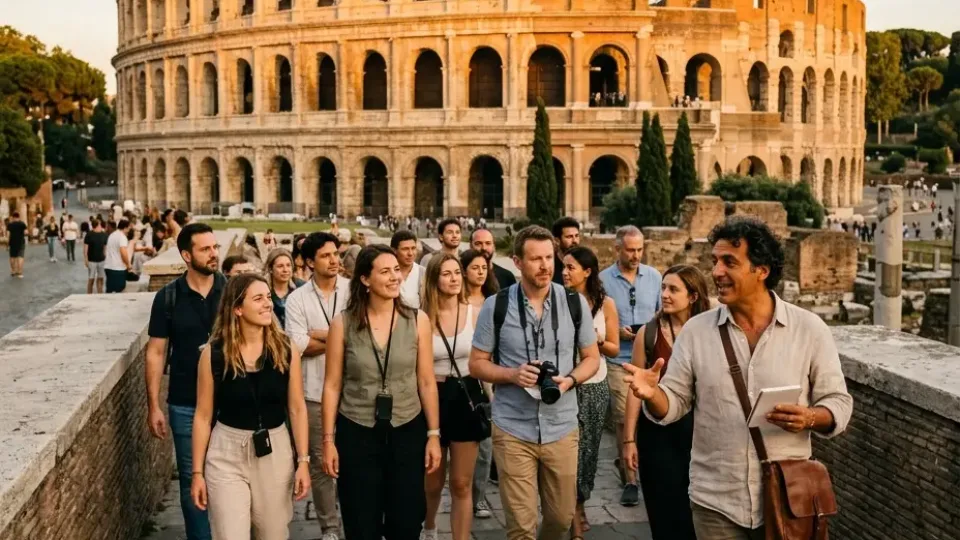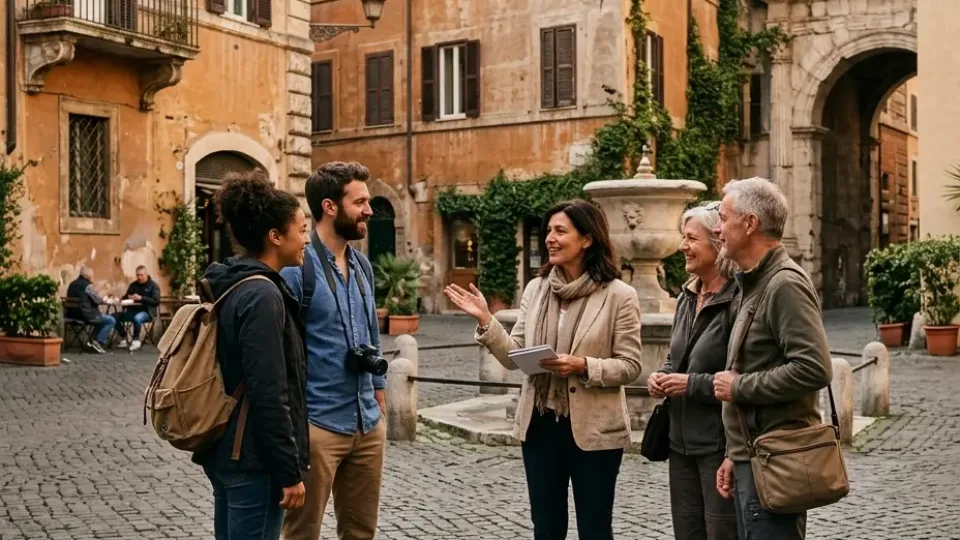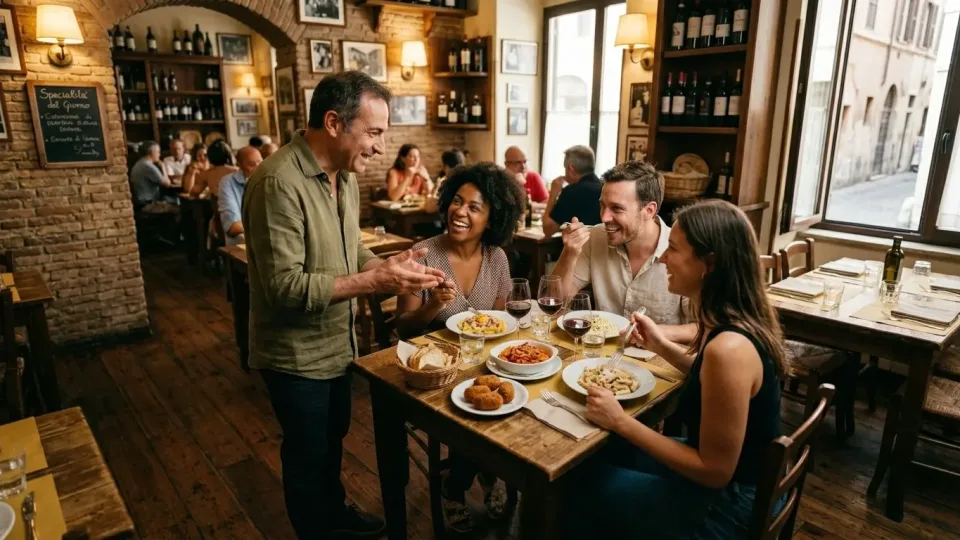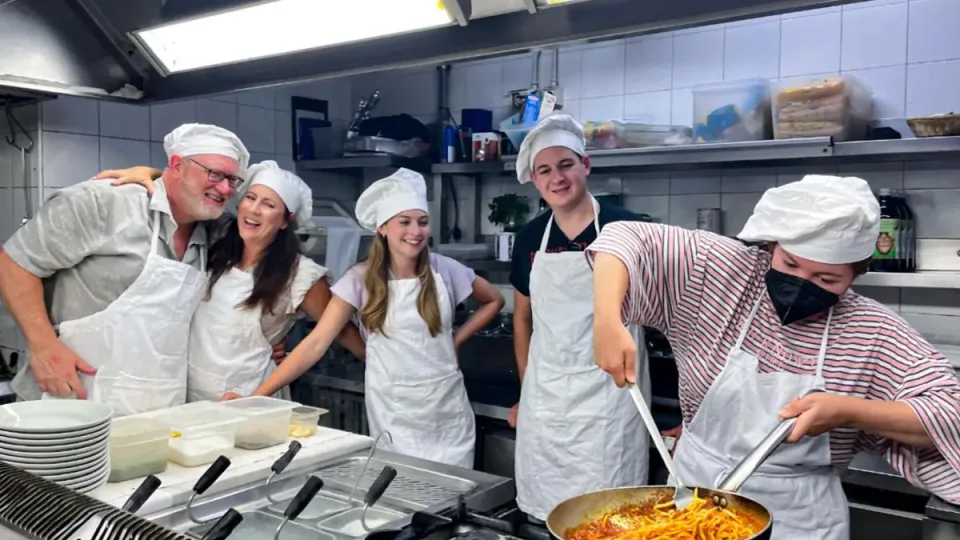

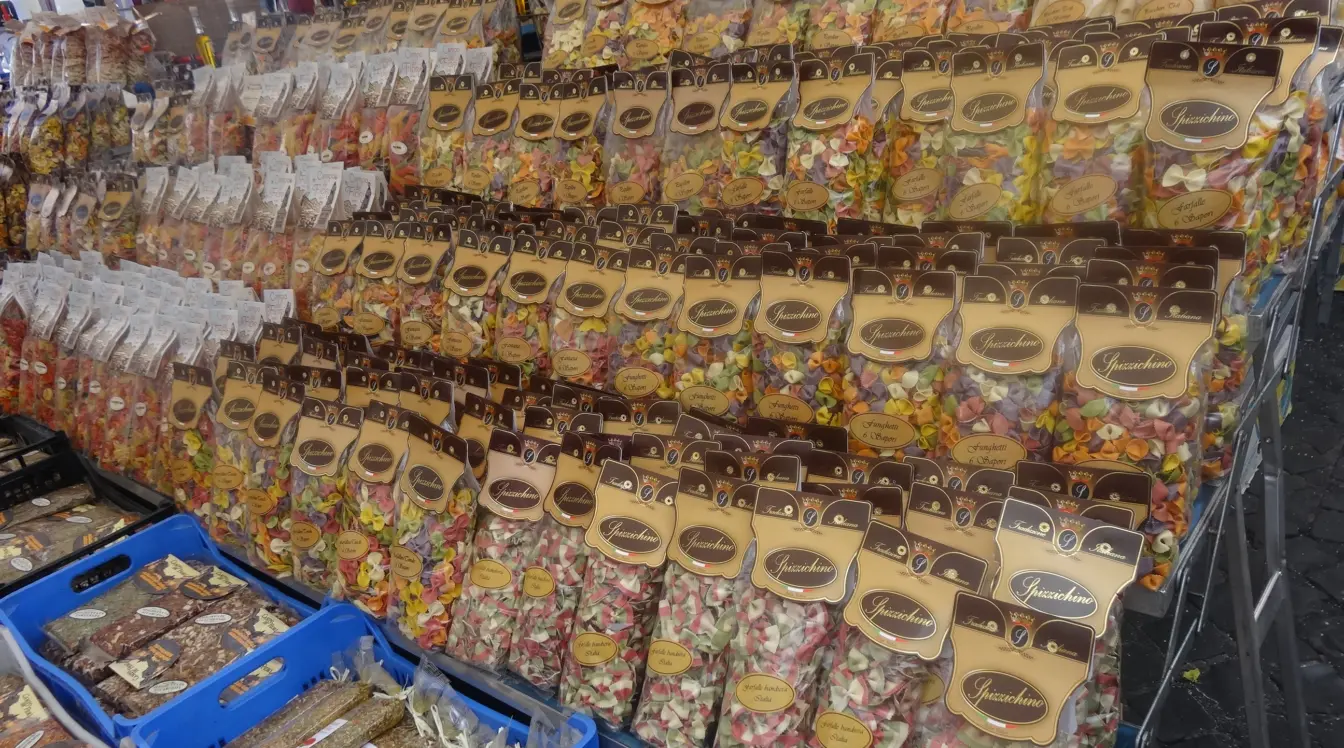
A food tour, market tour and cooking-with-locals experience can all look identical on a booking site: smiling group, wine glass, plates of pasta. In practice they solve different travel needs. One teaches a neighborhood, one teaches ingredients, and one gives you a social meal and hands-on cooking.
This comparison is for travelers deciding which one activity deserves three or four hours of a Rome trip.
| Food tour vs market tour vs cooking — quick answer | |
| Choose food tour if | You want neighborhood context and several tastes without cooking |
| Choose market tour if | You care about ingredients, shopping culture and food systems |
| Choose cooking with locals if | You want participation, conversation and a shared meal |
| Best first-trip option | Food tour, especially if you want orientation in Testaccio/Trastevere/Ghetto |
| Best repeat-trip option | Market + cooking or intimate local-host experience |
| Best for families | Cooking when age-appropriate; food tour for older kids who like trying things |
| Best rainy-day option | Cooking; market tours depend on the market and route |
| Biggest mistake | Choosing by number of included tastings instead of what you want to learn |
What each format is actually good at
Food tour: best for understanding a neighborhood
A strong food tour uses food to explain where you are. In Testaccio, that should mean the market, working-class food history and local institutions. In the Jewish Ghetto, it should explain Roman-Jewish cuisine and the neighborhood. In Trastevere, it should distinguish lived-in food culture from the tourist restaurant strip.
The weak version simply moves you between six tastings with almost no context.
Market tour: best for ingredient nerds
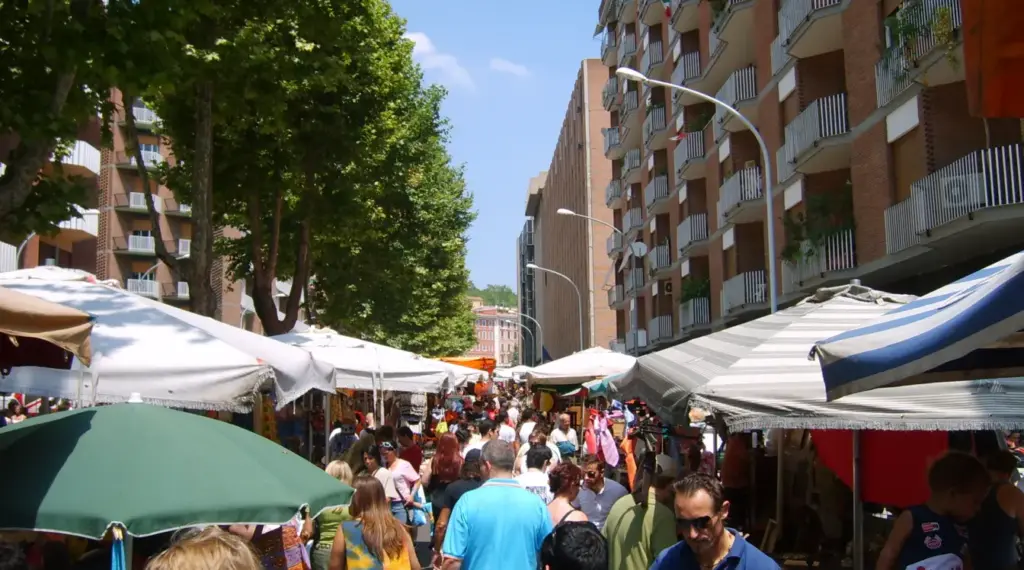
A market tour is useful if you genuinely care about produce, seasonality, cheese, cured meats, fish, vendors and how Romans shop. It is less useful if you are hoping for a full meal and the tour consists mainly of looking at stalls.
Mercato Trionfale and Testaccio are very different contexts. Ask which market the tour uses and why.
Market + cooking: the strongest serious-food format
The best market tours connect directly to cooking: you select or discuss ingredients and then use them. That gives the market visit a purpose and creates a clear before-and-after story.
It usually takes longer and costs more, but for travelers who plan trips around food this can be the most complete format.
Cooking with locals: best for human connection
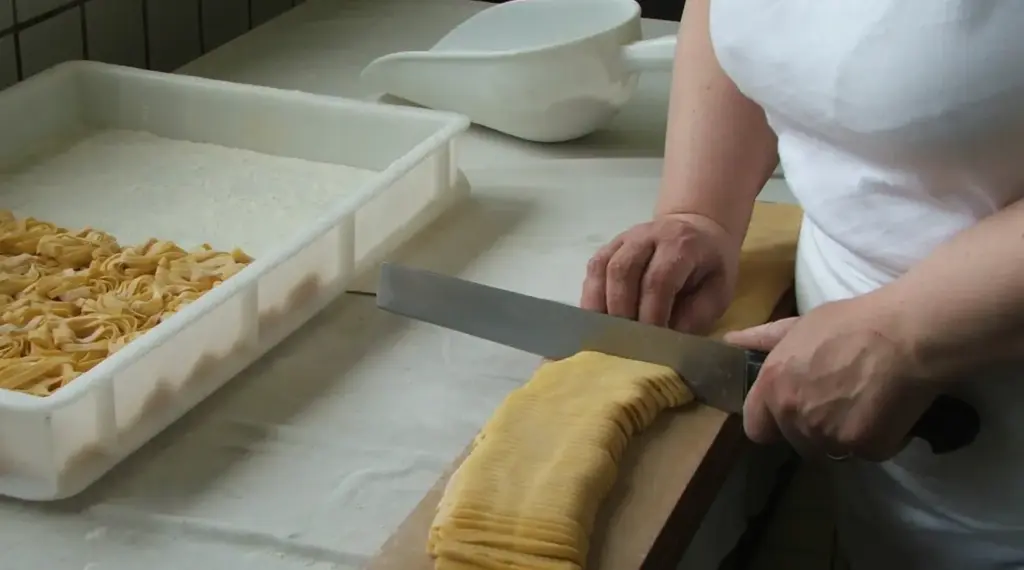
This category ranges from excellent home-host experiences to commercial classes marketed with vague “local family” language. The good version gives you a real host, specific recipes and enough group intimacy for conversation.
The current “Pasta with a Nonna” trend sits here: the appeal is not advanced culinary training but family food culture and sharing a meal.
Which gives you the most food?
Probably the food tour or cooking experience, but quantity is a poor way to choose. Six tiny tastings can be less satisfying than three meaningful ones; a cooking class may provide a full meal after only making one or two elements yourself.
Which teaches you the most?
- Neighborhood/history: food tour.
- Ingredients/seasonality: market tour.
- Technique: chef-led cooking class.
- Home culture: cooking with locals.
How to choose for your actual trip
Which is best for dietary restrictions?
Private cooking can often adapt most cleanly because one menu can be designed around you. Food tours with many partner stops may have less flexibility. Always disclose allergies before booking; “vegetarian” and “celiac-safe” are completely different levels of adaptation.
Which is best for children?
Children who like doing things may prefer cooking. Older kids interested in food can enjoy a food tour. Long ingredient lectures in a market are less universally successful.
Check minimum age and whether the provider has a real family format rather than assuming “all ages” means the class is designed for children.
Which is best for couples?
Cooking is the easiest date-style activity. A food tour is better if you want to walk and explore. A market tour suits couples who already spend vacations discussing olive oil and cheese.
Which is best on your first day?
A food tour can be excellent early in the trip because it teaches you a neighborhood and gives you restaurant/product context you can use later. A cooking class works better as a slower block after you have already done some sightseeing.
What should you ask before booking?
- How many people are in the group?
- Which neighborhood/market?
- Exactly how many stops vs actual dishes?
- How much walking?
- What is hands-on?
- Are drinks included?
- How are allergies handled?
- Does the host/guide live or work in the food community being discussed?
The tourist-trap signals
- “Secret” restaurants located on the most obvious tourist street.
- Huge groups moving through tiny shops.
- Market tours scheduled when the market is barely operating.
- Cooking experiences where all sauces and fillings are pre-made.
- No clear explanation of who the guide or host is.
- A route chosen for affiliate restaurants rather than neighborhood logic.
My decision rule
First Rome trip: food tour if you want context; cooking if you want activity. Second trip: market + cooking or local-host format. Serious cook: skip generic tourist pasta and book a proper school/private class.
Our existing guide to food tours vs cooking classes in Rome goes deeper on specific food-tour choices.
Frequently asked questions
Is a Rome food tour worth it?
Yes when the tour teaches a real neighborhood and local food culture rather than simply serving a sequence of tastings.
Is a market tour enough for lunch?
Not necessarily. Check how many actual tastings are included; some market tours are educational rather than meal-sized.
What Rome food communities keep asking for — and what that tells you
Travelers on r/rome regularly ask for a market-to-table experience that feels laid-back and genuinely participatory rather than a large tourist cooking class. That does not prove one provider is “authentic”, but it tells you what people are missing: context, a smaller group and a clear connection between the market and the meal.
Another recurring community debate is whether a Trastevere food tour is worth the money at all. That is why I would not buy by neighborhood name. Buy the guide, route and learning value. Trastevere can produce an excellent tour and an extremely touristy one on the same street.
Community check: Community discussion on Reddit. Community comments are anecdotal; factual details are checked against official sources elsewhere in this guide.
Sources checked
How to compare two listings that look identical
Ignore the hero photo and compare five things: neighborhood, group size, host credentials, actual hands-on time and food quantity. A “10 tastings” tour can mean ten bites; a “three-dish cooking class” can mean one dough plus two pre-made sauces. The detailed itinerary matters more than the headline.
How much walking should a food tour involve?
Enough to understand the neighborhood, not so much that food becomes a reward for surviving a walking tour. Ask for approximate distance and whether there are standing tastings. Travelers with mobility issues should choose tours with seated stops and realistic bathroom access.
Morning market tour vs evening food tour
Markets are strongest in the morning when vendors are active and the visit reflects real shopping rhythms. Evening is usually better for neighborhood food, wine and social atmosphere. If a market tour starts late afternoon, ask what will actually be open.
What I would choose on a three-day first trip
One food tour early in the trip gives you restaurant/product context for the following days. If cooking is a major hobby, replace that with a class. I would not book both unless food is one of the primary reasons for visiting Rome.
If you are staying in Rome only two nights
Do not book a market tour, food tour and cooking class. Choose one. A food tour is the most efficient introduction; a cooking class is better if cooking itself is one of your main travel interests.
How to avoid duplicating the same foods
Read menus before booking. If the food tour already includes carbonara, supplì, pizza and gelato, do not book a cooking class built around the same four items the next day unless repetition is exactly what you want to study.