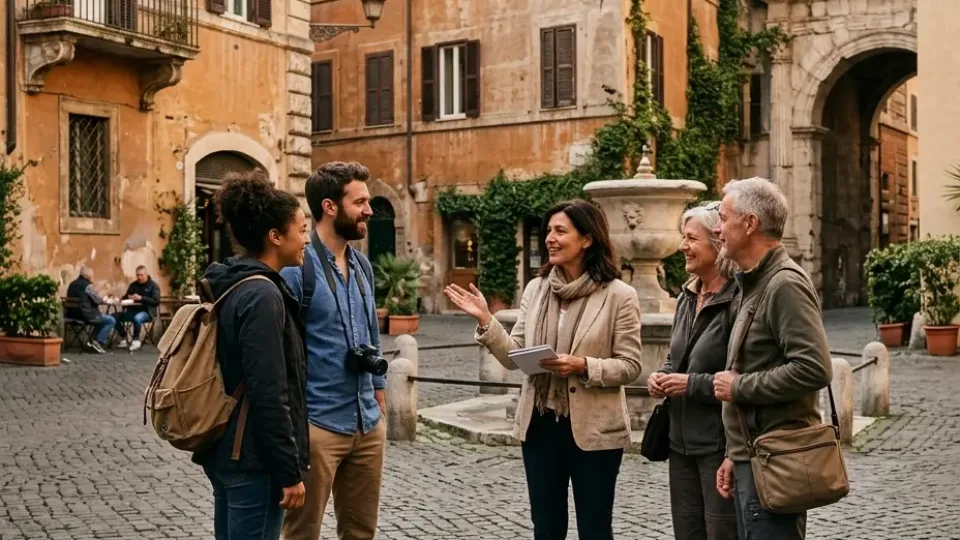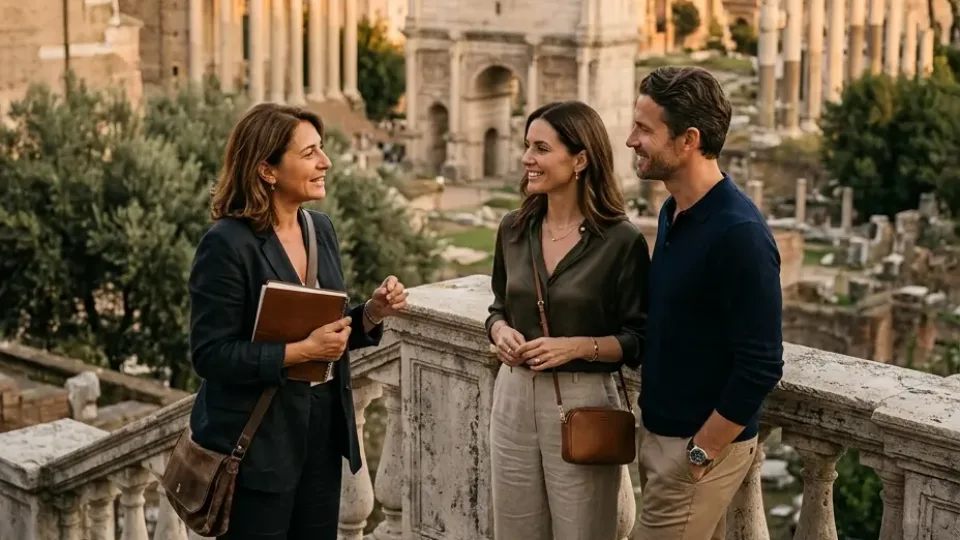

A literary walk through Rome can cover two centuries of writers in a few kilometers: Keats at the Spanish Steps, Goethe near Piazza del Popolo, Stendhal around the Pantheon, English Romantic circles and bookshops in the old center. The city is especially good for this because many literary addresses remain real buildings rather than vanished plaques in redeveloped districts.
This route is designed as a walk, not a bibliography. It tells you where to stop, how long to spend and which museums are worth entering.
| Literary Rome walk — quick answer | |
| Start | Keats-Shelley House, Piazza di Spagna |
| Second stop | Via del Babuino / Via Margutta |
| Main museum stop | Casa di Goethe, Via del Corso 18 |
| Historic-center writers | Pantheon / Piazza della Minerva / old hotels |
| Bookshop finish | Otherwise Bookshop, Via del Governo Vecchio 80 |
| Time without museums | About 2.5–3 hours |
| Time with both museums | About 5–6 hours including lunch/coffee |
| Best for | English-language readers, Grand Tour fans and repeat Rome visitors |
The core literary walk
Stop 1: Keats-Shelley House
Begin at Piazza di Spagna 26, next to the Spanish Steps. John Keats arrived in Rome hoping the climate might help his illness and died in this house in 1821 at only 25.
The museum preserves his bedroom and collections connected to Keats, Shelley, Byron and other writers. Current hours are Monday–Saturday 10:00–13:00 and 14:00–18:00, with standard admission €7.
Allow 45–60 minutes if you care about the literature; less if you are mainly following the route.
Stop 2: Via del Babuino and Via Margutta
Walk north toward Piazza del Popolo. This was part of the foreign artists’ quarter, and Via Margutta became associated with artists, studios and later cinematic Rome.
The point here is atmosphere, not a single writer’s door. Walk slowly enough to notice how close the creative district is to the formal grandeur of Piazza di Spagna.
Stop 3: Casa di Goethe
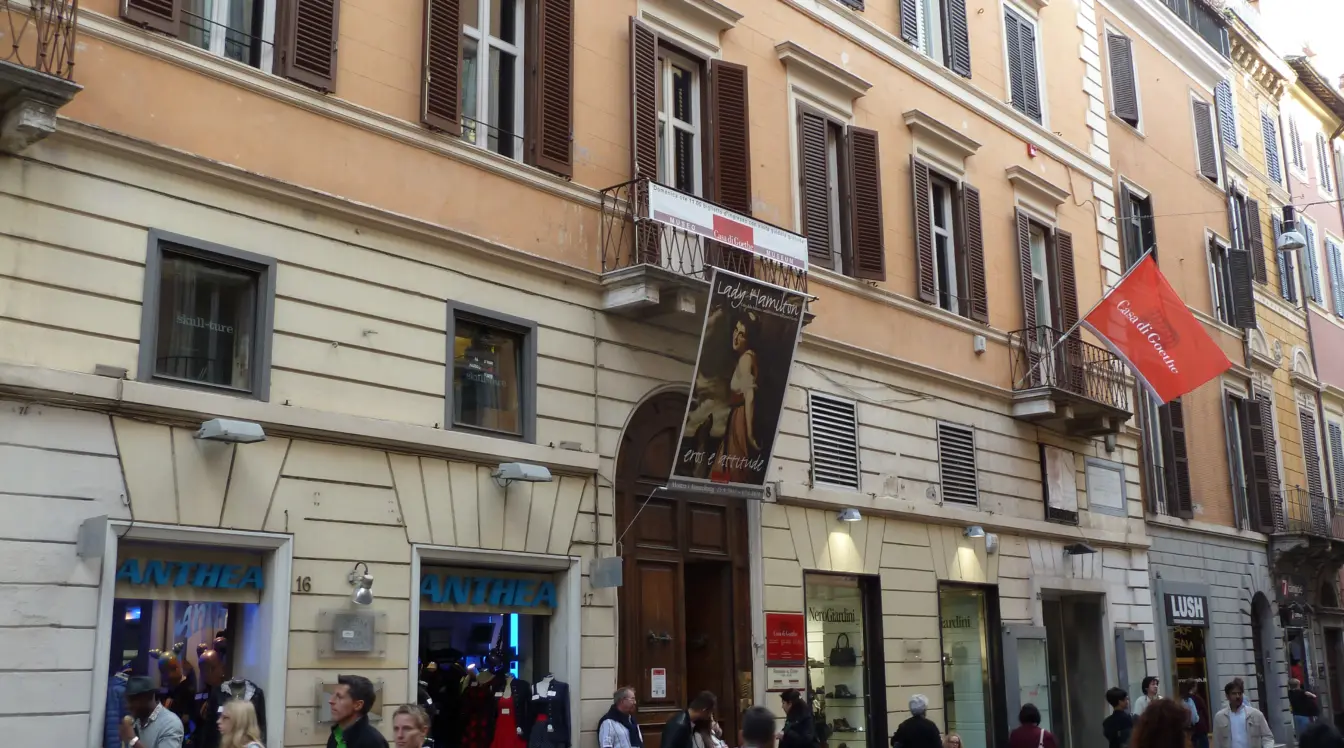
At Via del Corso 18, Goethe lived with painter friends during his Italian journey from 1786 to 1788. The apartment is now a museum about Goethe in Italy and German-Italian cultural exchange.
Current official hours are Tuesday–Sunday 10:00–18:00, last admission 17:30; standard admission €6. It houses books, letters, drawings and art, including material connected with the works he developed during his Roman stay.
Stop 4: Piazza del Popolo
Pause here rather than immediately turning back down Via del Corso. Piazza del Popolo was a monumental arrival point for travelers coming into Rome from the north and helps explain why the surrounding district became so important to foreign visitors and artists.
Stop 5: Walk Via del Corso toward the Pantheon
This is the Grand Tour spine of the walk. You are moving through the same central geography that hosted writers, hotels, publishers and artistic communities for generations.
Do not walk the entire route on the busiest shopping strip if you hate crowds; use side streets through Campo Marzio.
Stop 6: Piazza della Minerva and Stendhal’s Rome
Turismo Roma traces Stendhal to the historic Grand Hotel della Minerva area, where he stayed during his long relationship with Rome. Herman Melville also stayed there later in the nineteenth century.
This is a useful place to think about literary Rome as a travel network: writers lived in hotels, wrote letters and books, met other visitors and used the same central streets you are walking.
Stop 7: Pantheon
Turismo Roma quotes Stendhal calling the Pantheon the most beautiful remnant of Roman antiquity. You do not need to turn every literary reference into a museum stop, but going inside gives the quote context.
Stop 8: Otherwise Bookshop
Finish at Via del Governo Vecchio 80, near Piazza Navona. Otherwise is an independent English-language bookshop with Italian literature in translation, Anglo-American fiction/non-fiction, poetry, magazines and independent publishing.
Turismo Roma currently lists it open daily 10:00–19:00. This is where I would buy the next book rather than another literary souvenir.
Extensions and practical planning
Optional extension: Caffè Letterario
If you want to continue into the evening and do not mind leaving the historic center, Caffè Letterario on Via Ostiense combines books, coffee/cocktails and live cultural programming. Check its current calendar before making the trip.
Optional second-day extensions
- Alberto Moravia House Museum.
- Luigi Pirandello’s study/house museum.
- Non-Catholic Cemetery for the Romantic-literary context around Keats and Shelley.
- Special events/readings at Casa di Goethe or Keats-Shelley House.
How to do the route efficiently
Check museum closing days first. Keats-Shelley is currently closed Sunday while Casa di Goethe is closed Monday, so there is no single day of the week when both are open every day. Tuesday through Saturday is the simplest overlap.
Do the museums before lunch and use the afternoon for the open-air walk/bookshop. That prevents you from reaching a locked museum door at 17:55 after spending the morning browsing.
Frequently asked questions
Can you visit both Keats-Shelley and Goethe House in one day?
Yes on days when both are open. They are close enough to combine on foot, and current ticket policies include a small cross-museum discount when visited within three days.
How long is the literary walk?
About 2.5–3 hours without museum interiors, or most of a day if you visit both houses and stop for lunch/book shopping.
The local extension that makes the route better on a second day
Rome community discussions frequently single out the Non-Catholic Cemetery as an underrated stop, especially for people interested in arts and letters. It belongs naturally with the literary story because Keats is buried there.
I would not bolt it onto the end of this walk after five hours in the center. Pair it with the Pyramid and Testaccio on another morning. That keeps the route human and gives the cemetery enough quiet to feel like a destination rather than stop number nine.
Community check: Community discussion on Reddit. Community comments are anecdotal; factual details are checked against official sources elsewhere in this guide.
Sources checked
- Keats-Shelley House — official visitor information
- Casa di Goethe — official hours
- Turismo Roma — artists’ homes in Rome
- Turismo Roma — Otherwise Bookshop
Best day of the week for the full route
Tuesday through Saturday is the cleanest overlap under current schedules: Keats-Shelley is open Monday–Saturday, while Casa di Goethe is open Tuesday–Sunday. Sunday loses Keats-Shelley; Monday loses Goethe. Always verify holidays before setting out.
Where to stop for lunch
Do not make lunch another literary research assignment. The route naturally passes Campo Marzio, Pantheon and Piazza Navona, so choose a good current restaurant near the point where you become hungry. The walk works because it remains a city day, not because every coffee table once hosted a writer.
A shorter 90-minute literary walk
If museums are closed or time is short: Spanish Steps/Keats exterior → Via del Babuino → Via Margutta → Piazza del Popolo → Casa di Goethe exterior → walk down Via del Corso. You still understand the geography of the foreign artists’ quarter without needing timed entry.
For researchers rather than tourists
Both institutions hold library material, but research access is not the same as museum admission. Keats-Shelley library visits are by appointment, and Casa di Goethe’s libraries likewise require prior arrangement. Contact them before travel if the collection — not the museum — is your real reason for coming.
Accessibility and pacing
The route is mostly central-city walking, but house museums occupy historic buildings and access details can differ. Casa di Goethe currently lists passenger-lift access with specific dimensions; contact both museums if mobility access is important rather than assuming all old apartments have identical facilities.
Best season for the walk
Spring and autumn are easiest for a long literary walk. In summer, visit the museums in the hottest hours and keep the outdoor section early or late. In rain, the route still works because the two house museums and bookshop create natural indoor anchors.
Bring one text with you
Save a poem, passage or chapter on your phone or carry a small paperback. Reading a few lines in the place itself can be more memorable than listening to a guide recite literary trivia. Just step out of pedestrian flow before stopping to read.
If you buy a book at the end of the walk, write the date and route inside the cover. It turns an ordinary paperback into a travel object without needing another souvenir.