
Rome is unusually good for book lovers because literary history is not confined to one museum district. Keats died beside the Spanish Steps, Goethe lived near Piazza del Popolo, writers stayed in old hotels around the Pantheon, English-language bookshops still operate in the historic center and house museums preserve the rooms, letters and libraries behind the names.
This guide mixes places to visit with places to actually buy and read books. It is designed for travelers who want a literary half-day or full day without turning Rome into a list of plaques.
| Rome for book lovers — quick answer | |
| Best literary museum | Keats-Shelley House at the Spanish Steps |
| Best second house museum | Casa di Goethe near Piazza del Popolo |
| Best English-language bookshop | Otherwise Bookshop, Via del Governo Vecchio 80 |
| Best literary café concept | Caffè Letterario, Via Ostiense 95 |
| Best compact route | Keats-Shelley → Via del Babuino → Casa di Goethe → Otherwise |
| Current Keats-Shelley admission | €7 standard, Mon–Sat 10–13 / 14–18 |
| Current Casa di Goethe admission | €6 standard, Tue–Sun 10–18 |
| Nice detail | Visit both museums within 3 days and each offers a €1 cross-museum discount under current rules |
Information checked on September 23, 2026. Museum hours and bookshop schedules can change; verify official pages before making a special trip.
Literary places worth visiting
1. Keats-Shelley House
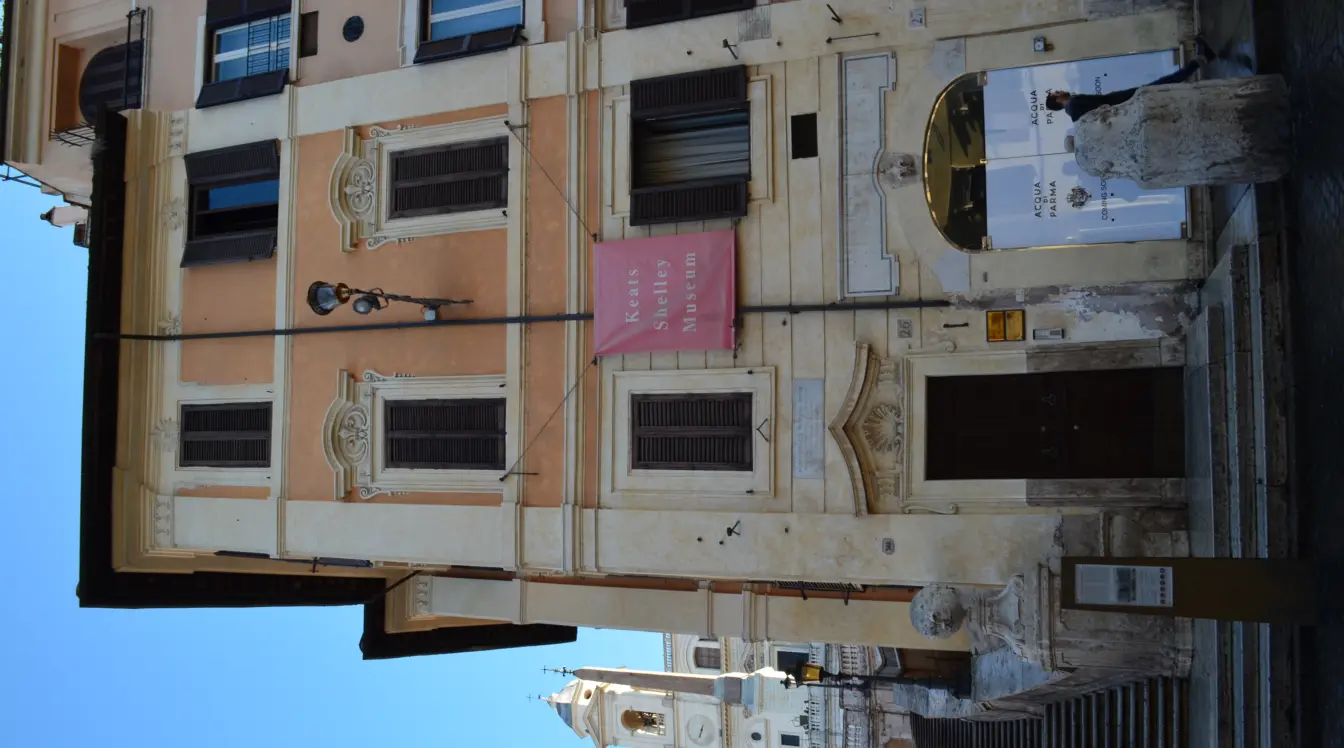
The Keats-Shelley House is directly beside the Spanish Steps, in the building where John Keats spent his final months and died in 1821. The museum preserves his bedroom and collections connected to Keats, Percy Bysshe Shelley, Lord Byron and later writers influenced by the Romantics.
The current official schedule is Monday–Saturday, 10:00–13:00 and 14:00–18:00, with last entry at 17:45. Standard admission is €7, reduced €5, and advance booking is possible but not required.
Worth it? Absolutely if you read English Romantic poetry. If you do not, the small museum can still be interesting but it is not a general history-of-Rome attraction.
2. The Keats-Shelley Library
The research library is separate from simply visiting the museum. Turismo Roma lists approximately 9,000 volumes along with manuscripts, engravings, drawings and photographs, focused on English Romanticism. Access is by appointment.
This is relevant for researchers and serious enthusiasts, not something to add casually between gelato and Trevi Fountain.
3. Casa di Goethe
Goethe lived at Via del Corso 18 from 1786 to 1788 during the Italian journey that became central to his writing and imagination. Today the apartment is Casa di Goethe, the only German museum outside Germany.
The current official hours are Tuesday–Sunday 10:00–18:00, last admission 17:30, closed Monday. Standard admission is €6. The museum includes manuscripts, drawings, art and two libraries, and regularly hosts readings, exhibitions and cultural events.
If you visit Keats-Shelley House within three days, the current reciprocal arrangement reduces admission by €1 at the second museum when you show your first ticket.
4. Otherwise Bookshop
Otherwise is one of the easiest recommendations for an English-speaking reader. Turismo Roma describes it as an independent English-language bookshop near Piazza Navona, focused on Anglo-American publishing, Italian literature in English, fiction, non-fiction, poetry, magazines and independent presses.
The current Turismo Roma listing gives Via del Governo Vecchio 80 and daily hours from 10:00 to 19:00. It fits naturally into a Piazza Navona/Pantheon day.
5. Caffè Letterario
Caffè Letterario on Via Ostiense is a large bookshop-café hybrid where reading, music, coffee and cocktails share the same space. Turismo Roma describes it as one of the city’s better-known literary cafés.
This is not a central literary pilgrimage stop like Keats. It makes more sense if your itinerary already includes Ostiense, Garbatella or Eataly and you want an evening space rather than another museum.
6. Piazza di Spagna as a literary neighborhood
The Spanish Steps area was a major nineteenth-century gathering point for foreign artists and writers. Turismo Roma’s house-museum guides place the Keats-Shelley House directly in this Romantic-era geography.
Instead of visiting the museum and immediately leaving, walk Via del Babuino and Via Margutta toward Piazza del Popolo. The route connects the literary houses with the artists’ district and leads naturally toward Goethe.
7. The Pantheon area and writers’ hotels
Turismo Roma traces several writers through hotels around the historic center. Stendhal stayed at the Grand Hotel della Minerva area and wrote extensively about Rome; Herman Melville stayed there later. Piazza della Rotonda’s historic inns also hosted generations of artists and intellectuals.
You do not need to enter every hotel lobby. The useful part is understanding that the streets around Pantheon and Piazza Navona were part of the lived Grand Tour, not only modern tourist Rome.
8. House museums beyond Keats and Goethe
Turismo Roma’s house-museum itinerary includes Alberto Moravia, Luigi Pirandello and other cultural figures. These are excellent second-trip options because they take you beyond the two most obvious international literary names.
How to turn literary Rome into an actual day rather than a syllabus
A literary half-day route
- 10:00: Keats-Shelley House.
- 11:00: walk Via del Babuino / Via Margutta.
- 12:00: Casa di Goethe near Piazza del Popolo.
- 13:00: lunch.
- 14:30: walk through the historic center to Otherwise Bookshop.
- 15:30 onward: Pantheon/Piazza Navona or simply read with coffee.
What should you buy?
- An English translation of an Italian novel you discovered in Rome.
- A museum edition or facsimile connected to Keats/Goethe.
- A small independent-press book from Otherwise.
- A Roman literary map or art book.
- A notebook or fountain pen from a historic specialist nearby.
The easiest way is to alternate reading-heavy stops with ordinary city time. One house museum, one bookshop, lunch and a long walk will usually stay with you more than four literary interiors in a row.
Frequently asked questions
Are there English bookstores in Rome?
Yes. Otherwise Bookshop near Piazza Navona specializes in English-language and Anglo-American publishing.
Can you visit the house where Keats died?
Yes. It is now the Keats-Shelley House museum beside the Spanish Steps.
How long do the literary museums take?
They are smaller house museums; roughly 45–90 minutes each is enough for most visitors, depending on how deeply you read the displays.
The community detour I would add: the Non-Catholic Cemetery
When r/rome users discuss underrated places, the Non-Catholic Cemetery comes up repeatedly — often specifically because of the writers and artists buried there. For a literary traveler, that is not a random hidden gem: Keats and Shelley’s circle gives the place a direct connection to the same story as the house museum.
I would add it on a second literary half-day with the Pyramid and Testaccio, not force it into the Spanish Steps–Goethe route. That is the sort of community suggestion that genuinely improves the guide because it creates another coherent geography.
Community check: Community discussion on Reddit. Community comments are anecdotal; factual details are checked against official sources elsewhere in this guide.
Sources checked
- Keats-Shelley House — official visitor information
- Casa di Goethe — official admission and hours
- Turismo Roma — Otherwise Bookshop
- Turismo Roma — Caffè Letterario
- Turismo Roma — House Museums
Best bookstores for different readers
Otherwise is strongest for English-language fiction, Italian books in translation and independent publishing. Museum shops are better for place-specific editions, facsimiles and literary history. General Italian bookstores are useful if you read Italian or want art/photography books that do not need translation.
Literary events: check the calendar, not only the shelves
Casa di Goethe’s 2026 calendar includes book presentations, conversations and exhibition events, and both literary museums regularly run programming. If your dates align, an evening event gives you a much more contemporary connection to literary Rome than simply visiting the rooms during opening hours.
A rainy literary Rome day
Keats-Shelley House, Casa di Goethe, a long bookshop browse and Caffè Letterario create a full indoor-heavy day. Add a proper lunch between museums and you have a weather plan that does not feel like a consolation prize.
For children and teens who like books
Do not assume house museums will automatically hold a young reader’s attention. Pair one literary museum with a bookshop where they can choose their own book, then move to a park/café. Otherwise lists children’s books among its services, which can make the route more flexible for families.
What a literary traveler should skip
Do not chase every plaque. A house museum, one good bookshop and a walk through the relevant neighborhood will tell you more than photographing twelve addresses where writers once slept. Leave room to read.
Pair books with places, not with obligation
Choose one writer connected to the neighborhood you are already visiting. Keats fits Piazza di Spagna, Goethe fits Via del Corso/Piazza del Popolo, and contemporary Italian literature can accompany a slower café or park afternoon.