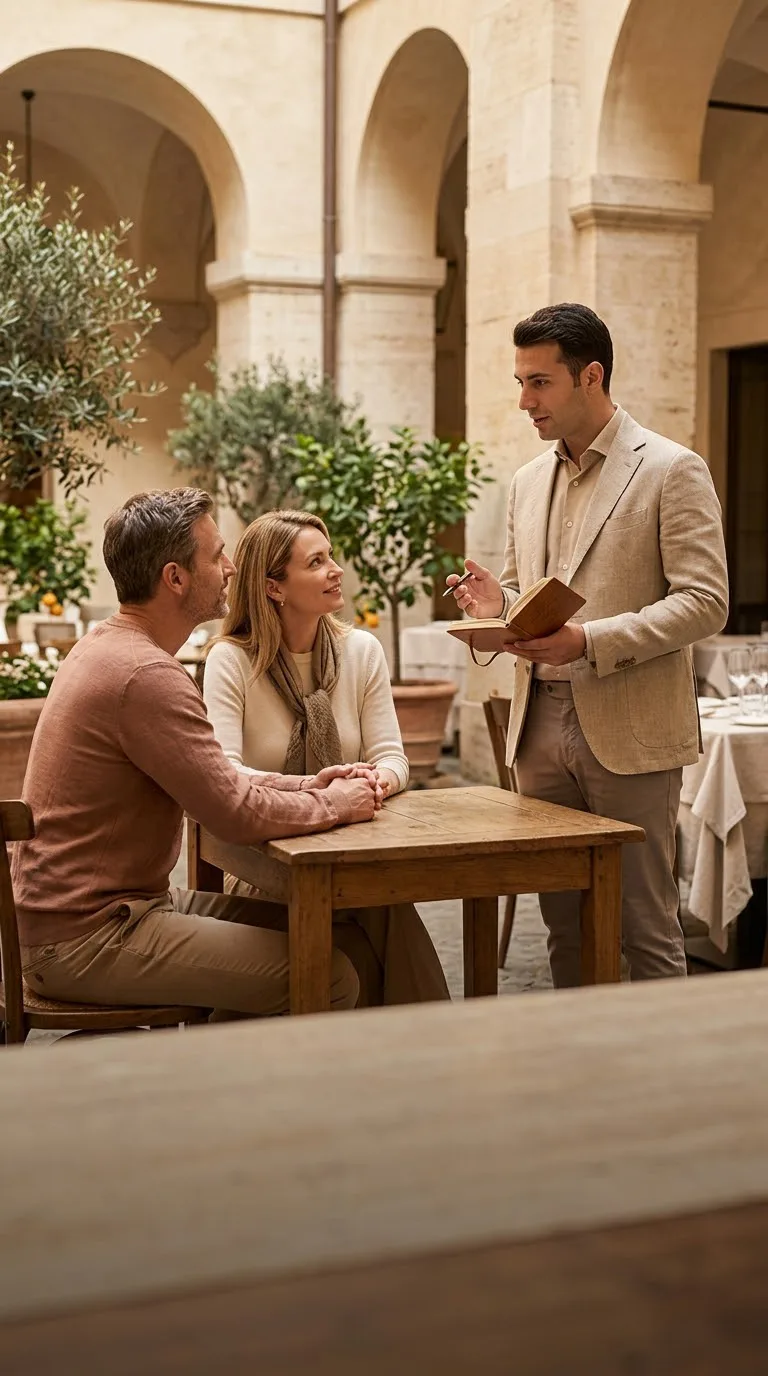


Eating well in Rome is easy. Eating well without ending up in the usual tourist trap, however, takes a little bit of judgment.
Roman cuisine is not meant to look elegant at all costs. It is direct, flavorful, and practical. Guanciale, pecorino, black pepper, artichokes, offal, fried bites, good bread, Lazio wine: just a few elements, but they need to be handled properly. When a Roman dish is done badly, you notice it immediately.
This is not an endless list of “must-visit places” copied from the internet. It is a practical guide to understand what to eat in Rome, where it actually makes sense to try it, and which mistakes to avoid if you want a meal that adds something to your trip, not just a random dinner near a monument.
Let’s be clear about one thing: if you have limited time, do not try to taste everything. It is better to choose 3 or 4 good food experiences than chase ten viral places and end up tired, hungry, and late.
In short: what I would do if it were your first time in Rome
- For proper Roman pasta: choose a solid trattoria and book ahead, instead of walking into the first restaurant near the Trevi Fountain.
- For supplì: go to a place that specializes in street food rather than ordering a random fried starter just because it is on the menu.
- For the most traditional Roman food: Testaccio is still one of the best areas, especially if you care about Roman cuisine and local markets.
- For carciofi alla giudia: go to the Jewish Ghetto and check the season. Out of season, it is better not to insist.
- For maritozzo: have it for breakfast or mid-morning, not after a heavy lunch. Regoli is one of the classic names to keep on your list.
- To avoid tourist traps: photo menus, waiters calling you in from the street, and carbonara with cream are fairly clear warning signs.
What to eat in Rome: do not start from “famous places”, start from the right dishes
The best way to eat well in Rome is not to search for “the best restaurant in Rome”. That question is too broad and often leads to bad decisions.
Start instead from what you actually want to try: a proper carbonara, a hot supplì, carciofo alla giudia when in season, a creamy but not heavy cacio e pepe, a maritozzo with fresh whipped cream, or a more traditional dinner in Testaccio.
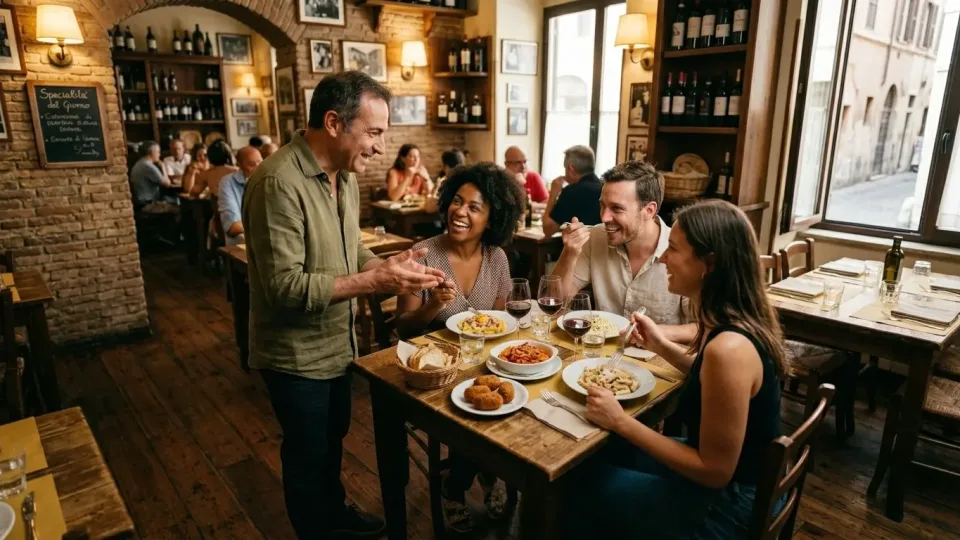
Every dish has its context. A carbonara ordered in a tourist restaurant with a plastic menu will not tell you the same story as a plate made in a serious trattoria. A hot supplì eaten on the go while walking often makes more sense than many starters added to a menu just to fill it up.
Clear advice: if you only have two or three meals available, dedicate at least one dinner to a real Roman trattoria and one more informal lunch to street food or a market. It is the smartest way to see two different sides of the city without making the trip feel heavy.
The four Roman pastas: what to order and where it makes sense to try them
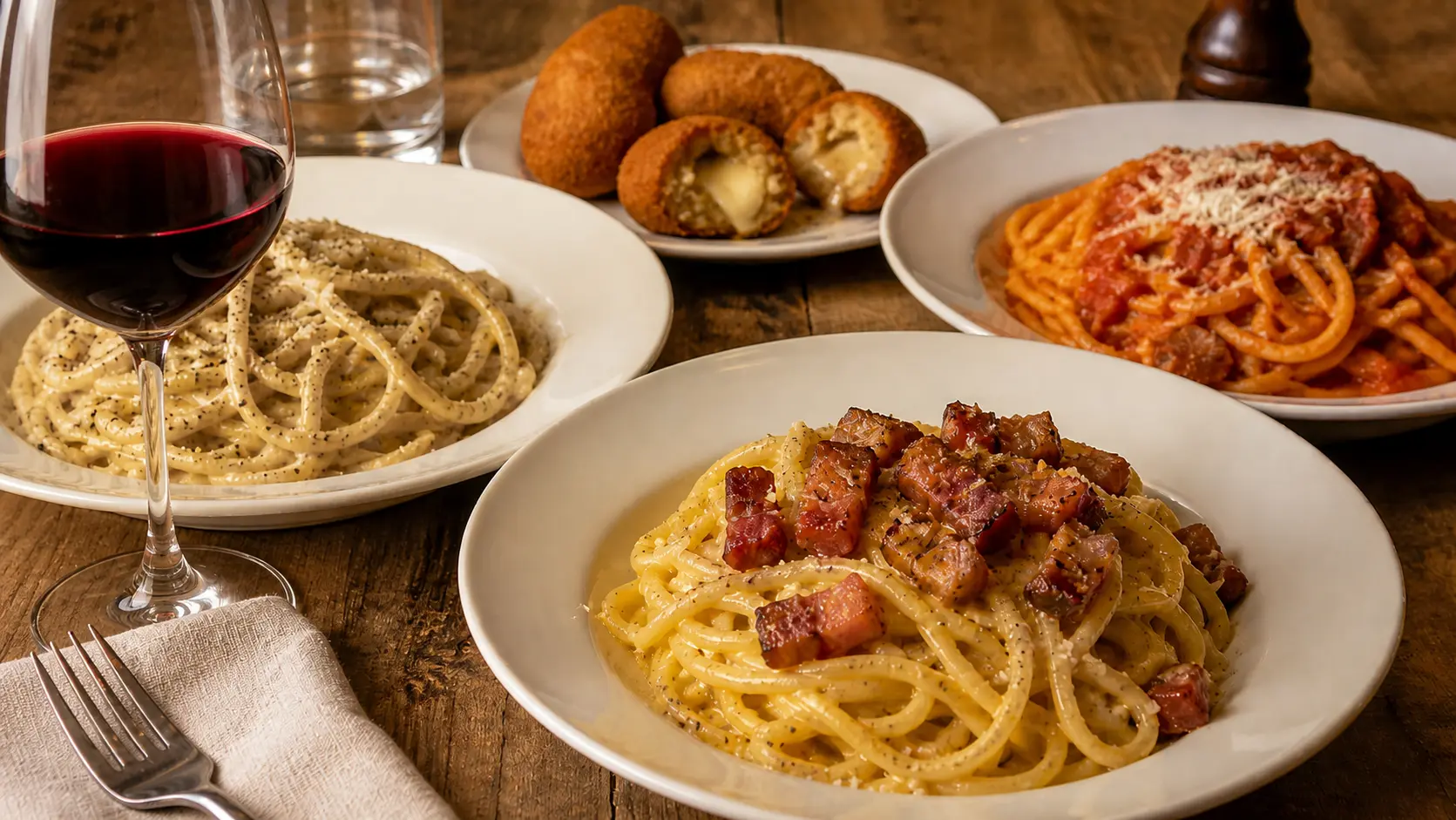
Carbonara, amatriciana, gricia, and cacio e pepe are the four pasta dishes everyone wants to try in Rome. The problem is that precisely because they are so famous, they are also among the most abused dishes in tourist restaurants.
The rule is simple: when Roman cuisine is done well, these dishes feel essential but never boring. When they are done badly, they become heavy, disconnected, too salty, or full of shortcuts.
Carbonara: guanciale, not bacon. And no cream.
Let’s start with carbonara, because this is the dish where it is not worth being diplomatic. Roman carbonara is made with guanciale, eggs, pecorino romano, and black pepper. It does not need cream, sweet pancetta, or the chef’s “special sauce”.
If you read “carbonara with bacon” or see a white sauce that looks too liquid, I would avoid it. Not because you need to be a purist at all costs, but because in Rome you can eat it much better.
For a more refined and central carbonara, Roscioli Salumeria con Cucina is one of the most mentioned names and should be booked in advance. If you want a more classic choice near the Pantheon, Armando al Pantheon is one of the few central addresses I would not dismiss as “too touristy” just because of its location. For a more neighborhood-style Roman meal, look toward Testaccio, with historic names such as Perilli or Flavio al Velavevodetto.
Practical choice: if it is your first Roman carbonara and you want to play it fairly safe, book ahead. Do not improvise at 9:00 pm hoping to get into the right place.
Cacio e pepe: simple only in appearance
Cacio e pepe is probably the trickiest of the Roman pastas. It looks very simple: pasta, pecorino, black pepper. In reality, it takes very little for it to become a sticky block or a dry pasta with grated cheese on top.
If you want to try a very recognizable version, Felice a Testaccio remains one of the strongest names for this dish. Is it famous? Yes. Is it very busy? Yes. But its tableside-mixed cacio e pepe has become a reference point precisely because it built a ritual around the dish.
My opinion: if you want a “first time in Rome” cacio e pepe, Felice makes sense. I would not choose it for a quiet, intimate dinner, but to understand why this dish became so iconic, yes.
Amatriciana: tomato, guanciale, and pecorino, without overcomplicating it
Amatriciana is more immediate than cacio e pepe, but here too the risk is finding sauces that are too sweet, too heavy, or too cafeteria-style. A good amatriciana should have tomato, the savoriness of guanciale, pecorino, and that slightly spicy edge that keeps it alive.
If you find it in a serious Roman trattoria, it is often a safer choice than carbonara in average places. Why? Because carbonara requires more technical precision, while amatriciana is a little more forgiving, even though the difference between good and memorable is still huge.
Concrete tip: if you are unsure in a traditional trattoria, look at what is coming out of the kitchen. If you see rich red amatriciana plates that look compact and are not buried under industrial grated cheese, it may be a good choice.
Gricia: the one many people skip, but often the most Roman
Gricia is the tomato-free sister of amatriciana: guanciale, pecorino, and black pepper. It is less famous abroad, but for me it is one of the most interesting pastas to try in Rome.
It is intense, savory, and direct. If you love guanciale and want something less expected than carbonara, order it. In a good trattoria, gricia can be the dish you remember most.
Do You Rome choice: if you have already eaten carbonara many times outside Rome, try gricia. It is less photogenic, but often more revealing.
Supplì, pizza al taglio, and trapizzino: Roman street food that actually makes sense
Street food in Rome does not need to be complicated. It needs to be hot, good, quick, and eaten at the right moment.
Supplì is the starting point. It is not a Roman arancino: it is a rice croquette, often with tomato sauce, with a mozzarella heart. When you open it and the mozzarella stretches, you understand why it is also called “supplì al telefono”.
Two names make sense if you want to try it properly: Supplizio, near Banchi Vecchi, if you want a more curated and central street food spot; and Supplì Roma in Trastevere, if you want something more direct, to grab and eat without overthinking it.
Another useful name is Trapizzino, born in Testaccio and now present in several areas of the city. It is not “ancient tradition”, but it is a good contemporary Roman invention: a pocket of pizza filled with very recognizable recipes such as chicken cacciatore, meatballs in tomato sauce, or tongue in green sauce.
The best choice: if you have little time, have a light lunch with supplì and trapizzino instead of sitting down in a mediocre restaurant. Good street food is better than a badly chosen trattoria.
Carciofi alla giudia and alla romana: eat them only when it makes sense
Artichokes are one of the great pleasures of Roman cuisine, but we need to be honest here: they are not something to order randomly all year round.
Carciofo alla giudia is tied to Jewish-Roman cuisine and is the symbolic dish of the Ghetto. It needs to be fried well: crispy outside, almost like an open flower; still soft inside. When done badly, it becomes oily, tired, and flat.
To try it, the Ghetto is the most logical area. Giggetto al Portico d’Ottavia is one of the historic names most connected to this dish. Piperno and Nonna Betta are also often mentioned when people talk about Jewish-Roman cuisine, but the advice here is simple: book, check the season, and do not expect a “secret” place. You are in a very popular area.
Carciofo alla romana is different: softer, stewed with garlic, mentuccia, and olive oil. Less theatrical, but very elegant when done well.
My opinion: if you have to choose only one and you are visiting at the right time of year, try carciofo alla giudia in the Ghetto. It is more memorable, more connected to the place, and more different from what you would probably eat elsewhere.
Testaccio: if you want to understand Roman cuisine, go here
Testaccio is not Rome’s most postcard-like neighborhood, and that is exactly why it works. Roman cuisine has concrete roots here: the market, offal, osterias, trattorias, real lunches, and less of the performance you sometimes find in the historic center.
Mercato di Testaccio is a smart stop if you want to taste several things without committing to a long lunch. You can eat street food, sandwiches, pizza, ready-made dishes, and local products. It is perfect for an informal lunch, especially if you want to see a more everyday side of Rome.
For a more classic dinner, Testaccio is the area I would look at before Trastevere if the goal is to eat Roman food. Trastevere is beautiful, but it is also very exposed to tourism. Testaccio, while well known, still keeps a stronger gastronomic substance.
Clear choice: if you have only one Roman dinner and want to reduce the risk of ending up in a touristy place, I would look first at Testaccio, then Monti or the Ghetto. I would keep Trastevere mainly if you want evening atmosphere.
Trastevere: beautiful and lively, but saying “let’s go to Trastevere” is not enough
Trastevere is one of the most loved neighborhoods among people visiting Rome. The problem is that, precisely for this reason, it is not automatically a guarantee of authenticity.
There are good places, of course. But there are also restaurants built to catch people who are walking around without a reservation, see a few pretty alleys, and sit at the first available table.
If you want to eat in Trastevere, avoid the loudest areas and do not trust atmosphere alone. A place can look “Roman” because it has checkered tablecloths, hanging wine flasks, and dialect phrases on the walls, and still serve a tired carbonara.
How to use it well: Trastevere is excellent for an informal evening, a supplì, a drink, and a walk after dinner. For an important Roman dinner, choose more carefully and book.
The Jewish Ghetto: not only artichokes
The Jewish Ghetto is a small, intense area deeply tied to Jewish-Roman cuisine. Carciofo alla giudia is the most famous dish, but it is not the only reason to go.
Here it also makes sense to try fried cod, anchovies, concia di zucchine, ricotta and sour cherry tarts, and some desserts from the Roman Jewish tradition.
For dessert, Boccione is a historic name in the Ghetto, especially for ricotta and sour cherry tart. Do not expect a polished place: that is part of its charm. There may be a line, the look is very simple, but if you want a dessert truly connected to the neighborhood, it is a sensible stop.
Practical tip: go to the Ghetto outside the busiest hours, especially if you want to take your time. At lunch and dinner it can become very touristy, but if you choose well, it remains one of the most interesting areas to understand Rome through food.
Maritozzo: Roman breakfast, not an end-of-dinner dessert
Maritozzo with whipped cream is one of those desserts that looks simple but, when done well, stays with you. Soft bun, fresh whipped cream, balanced sweetness. If the cream is heavy or the bun is dry, the whole thing loses its point.
The classic name to write down is Pasticceria Regoli, in Esquilino. It is a historic pastry shop, known precisely for its maritozzo. It is not a “secret” place, but not everything has to be. Some places are famous because they have simply stood the test of time.
I would do it like this: maritozzo in the morning, coffee, then a walk toward Santa Maria Maggiore or Monti. I would not squeeze it in after a carbonara and a fried artichoke, because you might end up hating yourself a little.
Concrete choice: if you want to try maritozzo, have it for breakfast or as a mid-morning break. That is when it makes the most sense.
Lazio wines: what to drink without turning dinner into a sommelier lesson
You do not need to turn every dinner into a technical tasting. But if you are in Rome, it makes sense to try at least one Lazio wine instead of always ordering “a house white” without thinking about it.
With fried foods, starters, carciofi alla romana, and lighter dishes, you can look at whites such as Frascati, Bellone, or Malvasia Puntinata. With abbacchio, oxtail, richer dishes, and meat-based Roman cuisine, Cesanese is the Lazio red to keep in mind.
You do not need to remember everything. Just ask for a Lazio bottle that works with the dishes you ordered. If the restaurant works well, they will guide you without making you feel like you are being tested.
| If you order | Drink | Why it works |
|---|---|---|
| Supplì, fried bites, starters | Frascati or Bellone | They refresh the palate without overpowering fried food |
| Cacio e pepe or carbonara | A savory Lazio white or a light red | It helps balance pecorino, pepper, and guanciale |
| Abbacchio, oxtail, meat dishes | Cesanese | It has more structure and can handle stronger flavors |
| Trapizzino or street food | Craft beer or a Lazio glass of wine | It is a more informal and coherent choice |
How to recognize a tourist restaurant in Rome
There are exceptions, of course. But some signs are fairly reliable.
If a waiter calls you in from the street, I would keep walking. If the menu has photos of every dish, flags in five languages, and “special menu pasta pizza gelato”, I would pass. If you find carbonara, lasagna, pizza, schnitzel, paella, burgers, and tiramisu on the same menu, that is not variety: it is confusion.
Another sign: Roman dishes served out of season as if nothing had changed. Artichokes, for example, are not the same all year round. If you want to eat well, seasonality matters.
Warning signs to avoid
- Huge menu with too many different cuisines.
- Plastic photos of dishes displayed outside.
- Staff insisting you come in.
- Carbonara with cream, bacon, or “special sauce”.
- Restaurants right next to monuments with fixed tourist menus.
- Recent reviews mentioning unclear bills or cold dishes.
Practical rule: you can eat well near monuments, but you need a precise name. If you are improvising without a reservation in front of a famous square, the odds are not in your favor.
Where to eat in Rome based on the kind of day you want
To make this guide more useful, here is how I would actually organize a food day in Rome, without turning it into a marathon.
If you only have one day
Have breakfast with a maritozzo at Regoli or in a good pastry shop, a quick lunch with supplì or at a market, and dinner in a booked trattoria. Do not waste your only dinner in a place chosen out of hunger at 9:30 pm.
If you want a more local day
Go to Testaccio. Market for lunch, a walk around the neighborhood, dinner in a trattoria. It is less scenic than the center, but much more useful if you want to understand Roman cuisine.
If you want evening atmosphere
Trastevere works, but choose where to eat before you go. Do not leave the decision to your hunger in the moment. Walking there after dinner makes sense; choosing the first free restaurant a little less.
If you want Jewish-Roman cuisine
Go to the Ghetto, order carciofo alla giudia in season, fried cod if you find it, and finish with ricotta and sour cherry tart from Boccione if you still have room.
Places to note down without pretending they are “secret”
Many articles promise places “where only Romans go”. In Rome, in 2026, that phrase should be treated with caution. If a place is good and online, tourists probably know it too.
The point is not to find a secret place. The point is to choose places that still make sense and have quality and identity.
| For what | Name to note down | Why it makes sense |
|---|---|---|
| Central and curated carbonara | Roscioli Salumeria con Cucina | A very well-known address, to be booked, useful if you want a precise and more gastronomic version |
| Classic near the Pantheon | Armando al Pantheon | One of the few central names worth taking seriously |
| Iconic cacio e pepe | Felice a Testaccio | Famous for its tableside-mixed cacio e pepe |
| Roman street food | Supplizio | A good choice for supplì and fried bites in a central area |
| Supplì in Trastevere | Supplì Roma | Direct, informal, perfect to eat on the go |
| Trapizzino | Trapizzino Testaccio or Trastevere | A contemporary Roman idea, great for a quick lunch or aperitivo |
| Maritozzo | Pasticceria Regoli | A historic Roman pastry shop, a reference for maritozzi with whipped cream |
| Ghetto desserts | Boccione | Worth trying for ricotta and sour cherry tart and Roman Jewish desserts |
| Carciofi alla giudia | Giggetto, Piperno, Nonna Betta | Well-known addresses in the Ghetto; best evaluated in season and with a reservation |
| Informal lunch | Mercato di Testaccio | Good for tasting several things without committing to a long lunch |
Mistakes to avoid when eating in Rome
The first mistake is trying to eat “the best of Rome” in two days. Rome cannot be exhausted in a weekend, so choose well instead of piling up stops.
The second mistake is not booking. For the most requested places, especially carbonara, cacio e pepe, and historic trattorias, improvising is often the best way to end up somewhere mediocre.
The third mistake is thinking that “near a monument” automatically means “avoid”. That is not always true: Armando al Pantheon is there to remind us. But if you do not have a precise name, then yes, it is better to walk away a little.
The fourth mistake is ignoring meal times. In Rome, lunch is generally around 1:00-2:30 pm, and dinner is later than in many other countries. If you arrive at 6:30 pm for dinner in a real trattoria, you may find it still closed or a service designed mainly for tourists.
Final tip: book important dinners, keep lunches and street food flexible, and always have a plan B. In Rome, plan B often saves the evening.
Our recommended food itinerary for a first time in Rome
If we had to build a simple route, without stress and without a fake hunt for a hidden place, I would do it like this.
Morning
Maritozzo at Regoli or breakfast in a serious pastry shop. Then walk toward Monti or the Historic Center.
Lunch
Supplì and street food if you are on the move, or Mercato di Testaccio if you want a more interesting and less touristy break.
Afternoon
Coffee, a walk in the Ghetto or Trastevere. If you are in the Ghetto, consider Boccione for a dessert to take away.
Dinner
Booked trattoria. If you want classic Roman food: Testaccio. If you want central but reliable: choose a precise name. If you want atmosphere: Trastevere, but without walking into the first place you see.
Conclusion: eating well in Rome is not a matter of luck
Eating well in Rome does not mean finding the “secret” place nobody knows. It means understanding what to order, when to go, which areas to choose, and which warning signs to avoid.
If it is your first time, do not overcomplicate things: choose a good Roman pasta, a proper supplì, a sensible food neighborhood, and at least one typical dessert. A few good choices are better than a long list of places taken from social media with no real logic.
Rome rewards those who are not in a rush and who choose with care. Testaccio for the most traditional food, the Ghetto for artichokes and Jewish-Roman cuisine, Trastevere for atmosphere, Monti for a central but more curated evening, Esquilino for a classic breakfast with maritozzo.
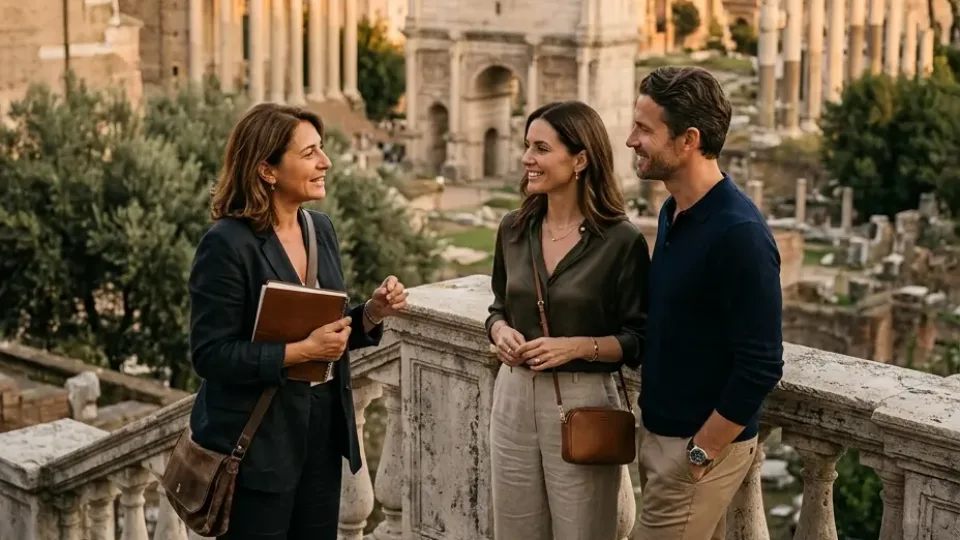
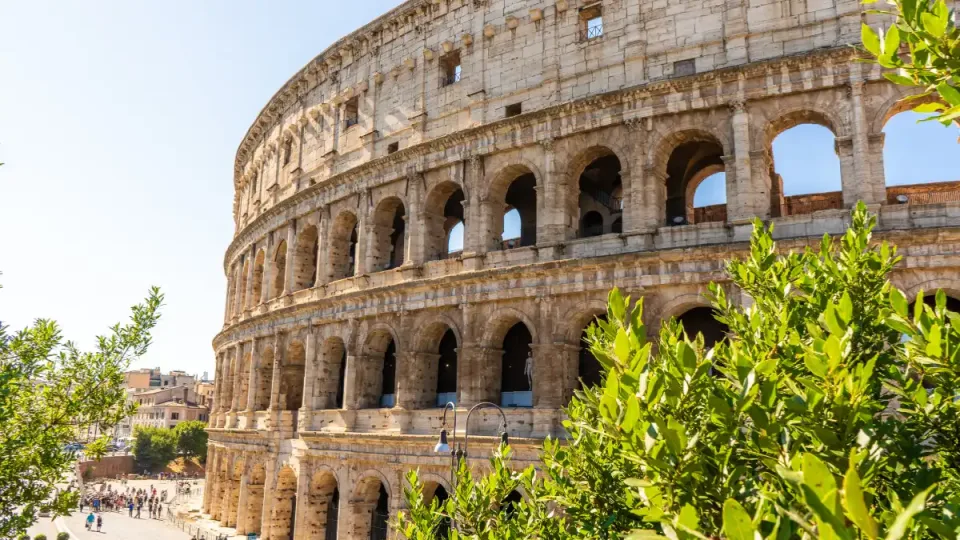
If you are planning to visit Rome and want to experience the city with more clarity, you can also start with a guided tour in Rome designed to help you discover places, stories, and neighborhoods without wasting time on overly touristy routes.
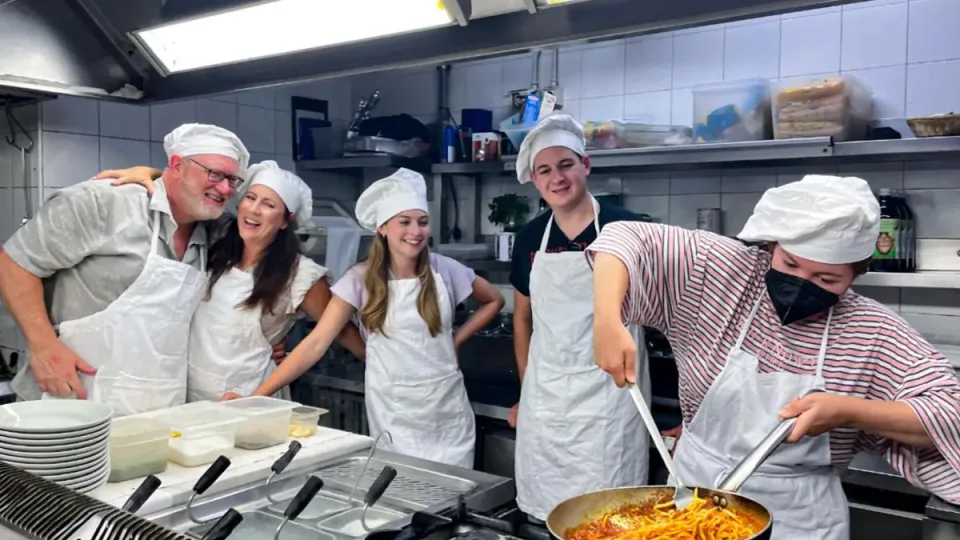
If, instead, you want to build a more personalized food experience, Do You Rome can help with tables, neighborhoods, timing, transfers, and practical advice. You can contact us here and tell us what kind of experience you want to have in Rome.
FAQ
What are the typical Roman dishes you should absolutely try?
For a first time in Rome, try at least one of the four Roman pastas: carbonara, cacio e pepe, amatriciana, or gricia. Add a supplì, carciofo alla giudia if it is in season, and a maritozzo with whipped cream for breakfast.
Where can you eat a good carbonara in Rome?
For a more curated and central carbonara, you can consider Roscioli Salumeria con Cucina. For a classic choice near the Pantheon, Armando al Pantheon is a solid name. In Testaccio, look at historic addresses such as Perilli or Flavio al Velavevodetto.
What is the best neighborhood for Roman cuisine?
If you want a clear answer: Testaccio. It is one of the most sensible neighborhoods to understand traditional Roman cuisine, with its market, trattorias, offal tradition, and classic dishes.
Where should you try carciofi alla giudia?
The Jewish Ghetto is the most logical area. Giggetto, Piperno, and Nonna Betta are among the most mentioned names for this dish. The advice is to try them in season and book ahead, because the area is very popular.
Where can you eat a good supplì in Rome?
Supplizio is a good central choice for a more curated supplì. Supplì Roma in Trastevere is more direct and informal. Trapizzino also serves supplì alongside its trapizzini in several Roman locations.
Where can you eat maritozzo in Rome?
Pasticceria Regoli, in Esquilino, is one of the best-known historic names for maritozzo with whipped cream. The best time to try it is in the morning or mid-morning, not after a heavy lunch.
How do you avoid tourist restaurants in Rome?
Avoid huge menus with plastic photos, waiters calling you in from the street, too many different cuisines, and carbonara with cream or bacon. If you are near a monument, only choose a place if you already have a reliable name.
Should you book restaurants in Rome?
Yes, especially for famous trattorias, historic places, and weekend dinners. Keep lunches, markets, and street food more flexible, but book important dinners to avoid ending up in the first available place.